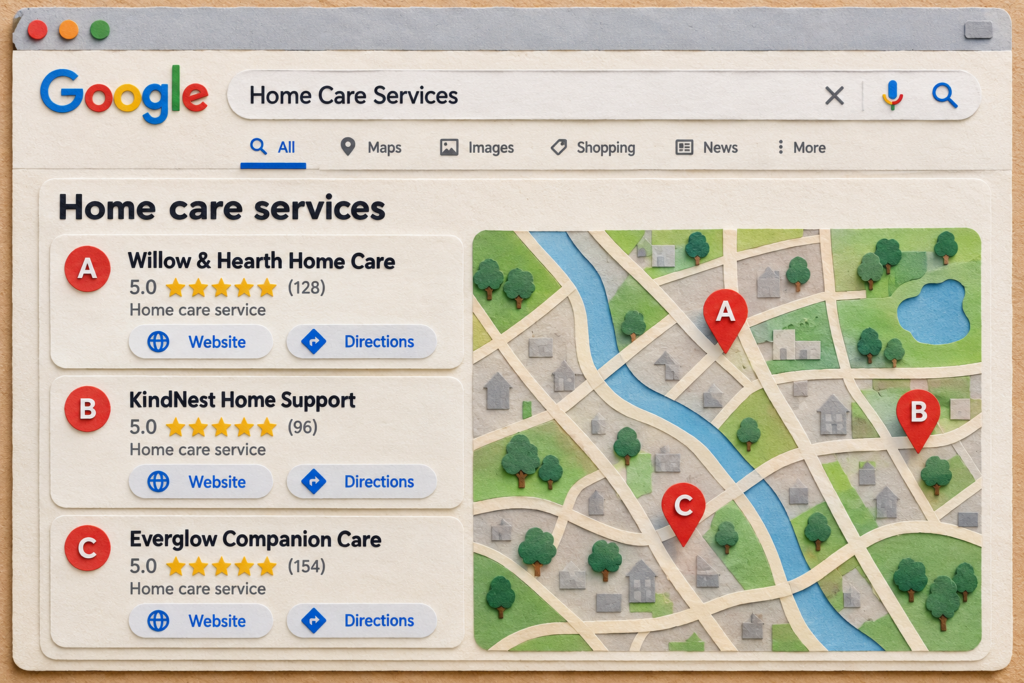


Google Maps SEO or local SEO as it is referred, is the most under optimized tool we see with local business owners. We at Wild Mango Marketing have audited over 300 local business owners’ sites. The first thing we do is check their Google Business Profile to see how they are ranking for specific keywords and where they sit in the map pack.
Looking at a home care provider, they were unaware that they were sitting in position 15 for their best-converting keyword. When I looked at their Google Maps, it was very thin versus their competitors who had fully optimized their maps and Google Business Profile. After running an audit, we found that it would only take a few quick optimizations, and before long, we had them up in the top three positions.
By optimizing your business’s online presence, particularly on Google Maps and related products, you dramatically increase your chances of being discovered by local shoppers, diners, and clients.
What Is Google Maps SEO?
Google Maps SEO refers to strategies that optimize your business’s position in local search results, especially within Google Maps and the coveted ‘Local Pack’ – the top three map listings Google shows for most local intent searches. This optimization pulls together elements of traditional search engine optimization and hyper-local targeting, focusing on business relevance, distance from the searcher, and prominence or popularity.
How Google Maps SEO Boosts Local Visibility
1. Puts You Where Customers Are Searching
- Most local customers use Google Maps to find businesses, and nearly one-third of all mobile searches are related to location.
- Businesses that appear in the top Google Maps results (‘Local Pack’) attract the majority of clicks, calls, and in-person visits.
2. Enhances Online Presence and Credibility
- A complete, optimized Google Business Profile (GBP) displays all crucial information – name, address, phone, business hours, website, images, and customer reviews.
- Businesses with detailed, up-to-date profiles look more professional and trustworthy, influencing consumer choice.
3. Connects You With Ready-to-Buy Customers
- Users searching on Google Maps often have high purchasing intent – they’re actively seeking something specific nearby and are ready to buy or visit.
- 76% of local searches result in a visit to the business within 24 hours, and 28% lead to a purchase.
4. Drives Calls, Clicks, and Foot Traffic
- Optimized listings make it easy for customers to find directions, call your store, or visit your website directly from search results.
- High-quality photos, clear service descriptions, and updated business hours increase engagement and click-through rates.
5. Boosts Local Rankings and Stays Ahead of Competitors
- Google values relevance (how well your business matches the search), distance (from the user), and prominence (how well-known/trusted the business is).
- Gathering and responding to reviews, adding fresh photos, and keeping business info consistent and accurate will help your listing climb local rankings—and show up before competitors.
Actionable Google Maps SEO Strategies
- Claim & Verify Your Google Business Profile (GBP): This is your central hub on Google for business info and customer engagement.
- Ensure NAP Consistency: Make sure your business name, address, and phone are identical everywhere they appear online.
- Use Accurate Business Categories: Select the right primary and secondary categories that match your services.
- Encourage and Respond to Google Reviews: Reviews improve trust and search ranking; responding shows engagement and builds customer rapport.
- Add High-Quality, Relevant Photos: Businesses with photos see 42% more requests for driving directions and 35% more website clicks.
- Post Regular Updates: Announce offers, events, or changes in services to keep your profile active and appealing.
- Monitor Insights and Engagement: Track how users interact with your listing to uncover opportunities for further optimization.
Real-World Impact
- Businesses with robust Maps SEO experience higher call volumes, increased website clicks, more driving direction requests, and greater walk-in traffic – leading to measurable growth in sales and customer base.
- For example, a cafe that optimizes its GBP and regularly collects reviews will attract more new customers searching for ‘best coffee near me,’ while an unoptimized competitor may remain invisible.
Key Takeaways
Google Maps SEO transforms your business’s local visibility from passive to proactive. By optimizing your Google presence, you appear front and center when it counts – just as local customers are looking to make a purchase, call, or visit. This advantage can shift the balance of local competition, securing more customers, greater brand trust, and tangible in-store growth.